The referee walked off. The game kept going.
Put the dates in a row. Late August, Woolworths publishes a plastic intensity score for its own-brand packaging for the first time. Early September, 190 Coles shareholders lodge a members' statement for the November AGM asking Coles to do the same and to set reduction targets. 8 September, the Commonwealth tells stakeholders the national scheme is off. 11 September, APCO releases a nine-point Policy Platform anyway, backing mandatory use of the Australasian Recycling Label and producer fees that stay inside the packaging system.
Read as a sequence, that is not a retreat. It is a handover. The one player with the power to set a single national floor stepped back, and every other player moved forward in the same fortnight. APCO's own position is that it is building the label, the data and the design guidance now so the machinery exists whatever framework government eventually chooses. Eco-modulated fees are already live this financial year. None of that needed the Bill.
The mistake is to read Canberra's decision as a slower clock. A law sets one deadline for everyone and arrives with a transition period, a consultation and an appeals process. What has replaced it has none of those things. It has a category manager, a spreadsheet and a range review date.
Woolworths published a number. Numbers travel.
Ten grams of plastic per unit sold. That is the figure Woolworths reported for its own-brand packaging across supermarkets and Big W in the last financial year. It is the first time either major has published a plastic intensity score, and only the second time any Australian supermarket has done it. Coles has never published one, which is exactly what the shareholder statement is designed to change before November.
Here is why a number matters more than a law. Once a retailer is publicly accountable for a metric, that metric does not stay on the own-brand side of the fixture. The category manager who is measured on it looks at every national brand in the bay through the same lens. A pack that makes the number worse is now a problem the buyer did not have last year. A pack that makes it better is a story the buyer can take upstairs.
A law would have set a floor that every brand met on the same day. Retailer pressure builds a ladder. Own-brand sits on a rung the retailer controls and can move whenever it likes. National brands are ranked against that rung, not against a regulation, and there is no transition period for falling behind it.
A law gives every brand the same deadline. A retailer gives you a range review.
Lightweighting is how brands quietly shrink on shelf.
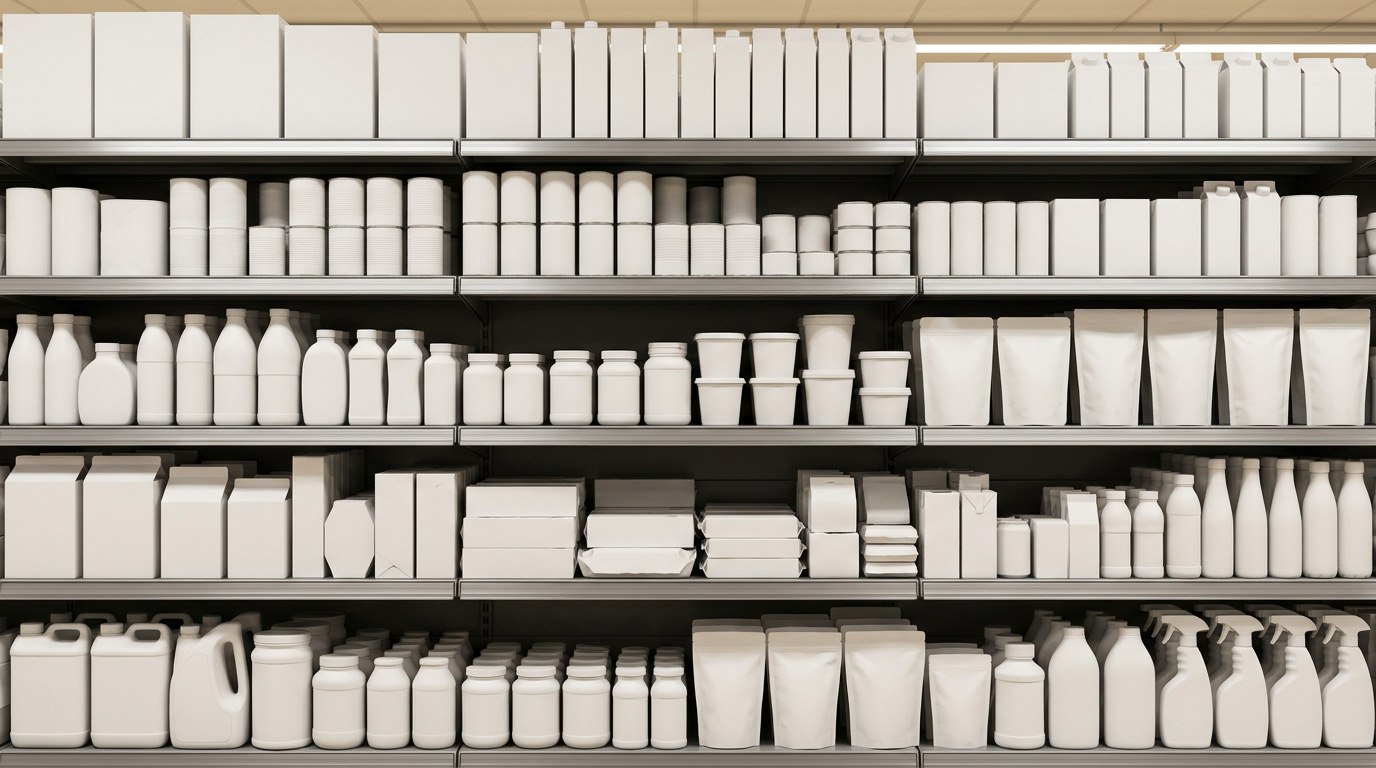
This is the point where it stops being a procurement conversation and becomes a design one. The fastest way to move a plastic number is to take material out. Thinner film. Lighter tray. Smaller window. No sleeve. Every one of those removes something the visual system was leaning on. Rigidity that let the pack stand up straight. Gloss that carried the colour. Print area that carried the brand block. Do it as a spec change and the pack gets quieter every quarter while the buyer congratulates you on the tonnage.
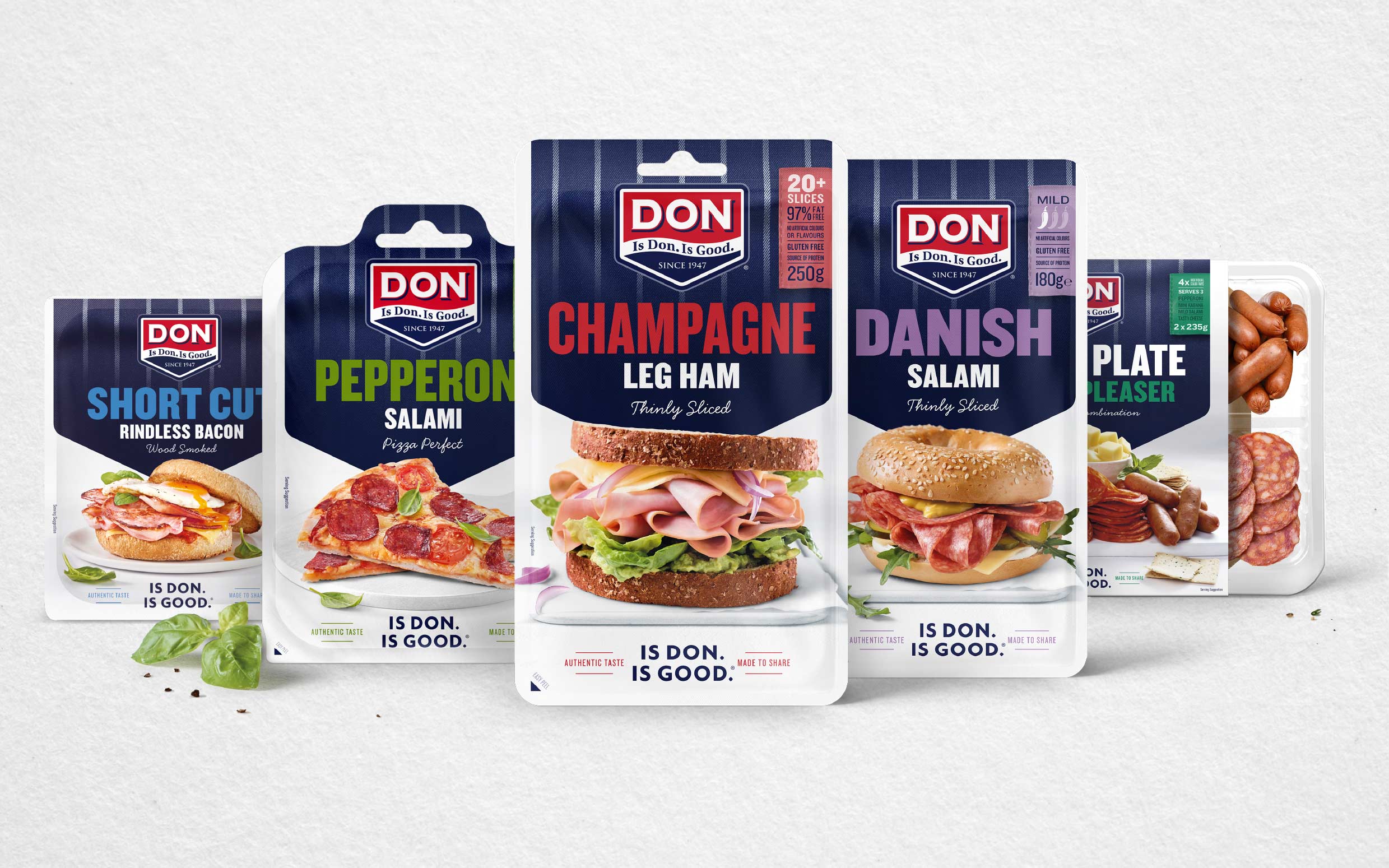
Chilled is the clearest test of this. DON lives in flow-wrap and tray formats where the plastic is doing the food safety job and cannot simply be wished away. The system we built for that range was designed to hold at a distance on a film that flexes. One navy field, one mark, a product name you can read from the trolley. When that format lightweights, and across the category it will, the job is to rebuild the presence with less substrate, not to trim the old artwork until it fits.
The wrong sequence is spec first, artwork after. The right sequence is to treat the material change as a full-system brief. What carries recognition when the gloss goes. What carries the brand block when the panel shrinks. What the recycling label looks like as a designed element rather than a stamp in the corner. Brands that run the second sequence end up lighter and louder. Brands that run the first end up lighter and invisible, and they will not be able to say when it happened.
Get to the number before the buyer does.
- Weigh your own packs. Grams of plastic per unit sold, by SKU. If Woolworths has that figure for its own brand, its buyers will want yours.
- Rank every SKU against the own-brand equivalent in the same bay, on material and recyclability, not on price.
- Treat the Australasian Recycling Label as mandatory from today. It is heading that way through the Covenant regardless of what Canberra does.
- Brief lightweighting as a brand-system job. Rebuild what the material was carrying before you remove the material.
- Take the number into the range review before it is asked for. Arriving with the answer is the only version of this conversation that ends well.
The regulation was going to give everyone the same floor at the same time. It is gone for now, and it may be gone for years. What remains is a ladder built by retailers who are in a hurry because their shareholders are. The brands that treat the next six months as breathing room will find that the deadline did not move. It just stopped being published.