The scoreboard moved from Canberra to the retailer.
The federal government has put packaging reform on hold, citing cost of living. Plenty of brands read that as a reprieve. It is not one. The pressure has not left. It has changed address.
Woolworths now publishes a plastic intensity score, which is the average mass of plastic packaging per item sold, for its own brand. Investors and campaign groups are pressing Coles to do the same. A retailer that has published a number cannot let it drift upward. It will be asked about it every year, by shareholders, in public.
That changes how a buyer reads your pack. It used to be a presentation question. Now it is also an arithmetic question. Every gram in your format is a gram in somebody else's report.
Shoppers are already doing the sums.
A YouGov poll commissioned by Future Super and released on 27 October gives a sense of the mood. It surveyed 1,504 Australian voters. 72% said they believe at least half the packaging in major supermarkets is unnecessary. 52% said they are likely to choose a product to avoid excess plastic. 62% said Coles and Woolworths are not doing enough.
Treat it with care. The poll was commissioned by advocacy groups ahead of the Coles AGM, the sample is voters rather than shoppers, and stated intent is a weak predictor of what lands in the trolley. Nobody should design a pack from a campaign poll. But the direction is consistent with what retailers are doing, and the retailers are the ones who list you.
Sustainability stopped being a story on your pack. It became a figure in your buyer's annual report.
The easy fix is the one that hurts the brand.
When a number is the target, the lazy response is to strip. Thinner film, smaller labels, fewer windows, a plain pack that looks like it was designed by a procurement team. It lowers the grams and quietly lowers the price the shopper is willing to pay. A pack that looks like a commodity gets treated like one.
The smarter move is to separate weight from presence. Shelf impact does not come from plastic. It comes from colour, hierarchy, a clear hero and a confident structure. A lighter mono-material film with a sharper print design can outperform a heavier, busier pack on the shelf and in the report. The grams and the brand are two different budgets, and good design spends the second one carefully while cutting the first.
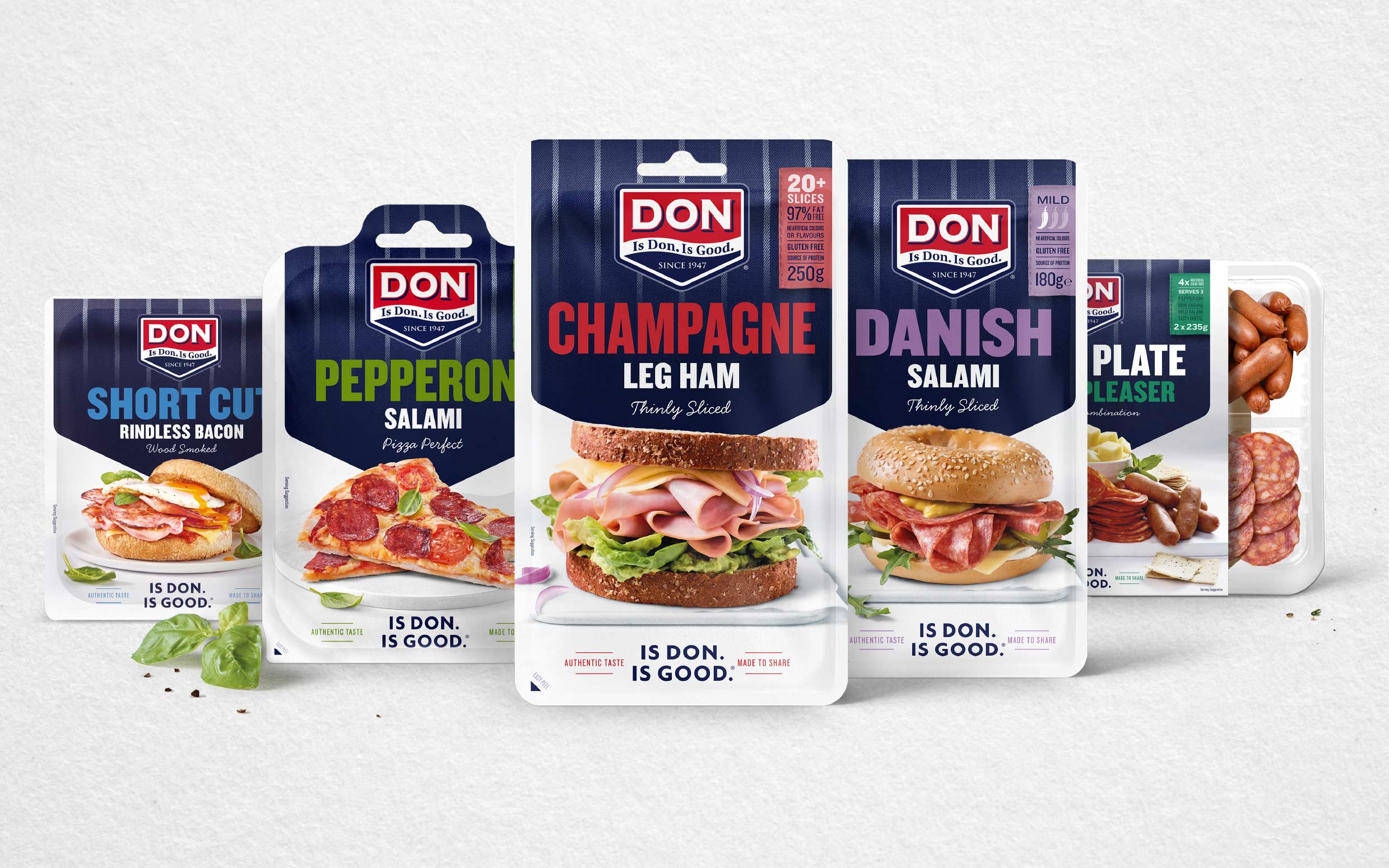
This matters most in categories sold in plastic by necessity, such as chilled smallgoods, fresh meal components and snacks. Those formats cannot go loose. They can go lighter, simpler in structure and easier to recover, while still looking like the premium choice. That is a design brief, and it is worth briefing early. We worked through the same tension on DON Crafted, where the pack had to earn a premium in a chilled fixture without carrying anything it did not need.
Walk in with your grams already counted.
- Know your plastic mass per unit. Weigh the pack, the tray, the film and the label. If you cannot state the number, you cannot defend it.
- Benchmark against the shelf. Find the lightest credible pack in your category and ask why yours is heavier.
- Design for mono-material first. Fewer layers and fewer components cost less to recover and score better when the fees land.
- Cut weight, keep presence. Reduce material in the structure, then invest the saving in print quality, hierarchy and shelf colour.
- Put the figure in the pitch. A supplier who arrives with a plastic reduction story is solving a problem the buyer has to report on.
Own-brand lines will feel this first, because retailers control those specs directly. Branded lines come next, because the same buyers set the rules for both. The brands that get ahead are the ones that reduce weight before they are asked, and can show the work. The ones that wait will be handed a target by someone whose priority is their own number.