What FMCG branding actually is.
FMCG stands for Fast-Moving Consumer Goods. It's the shorthand for the products that turn over quickly on the shelves of supermarkets, pharmacies, and specialty retailers. Groceries, drinks, snacks, vitamins, skincare, pet food, cleaning products, household items. The category is defined by high frequency of purchase and low unit price, which shapes every commercial decision downstream.
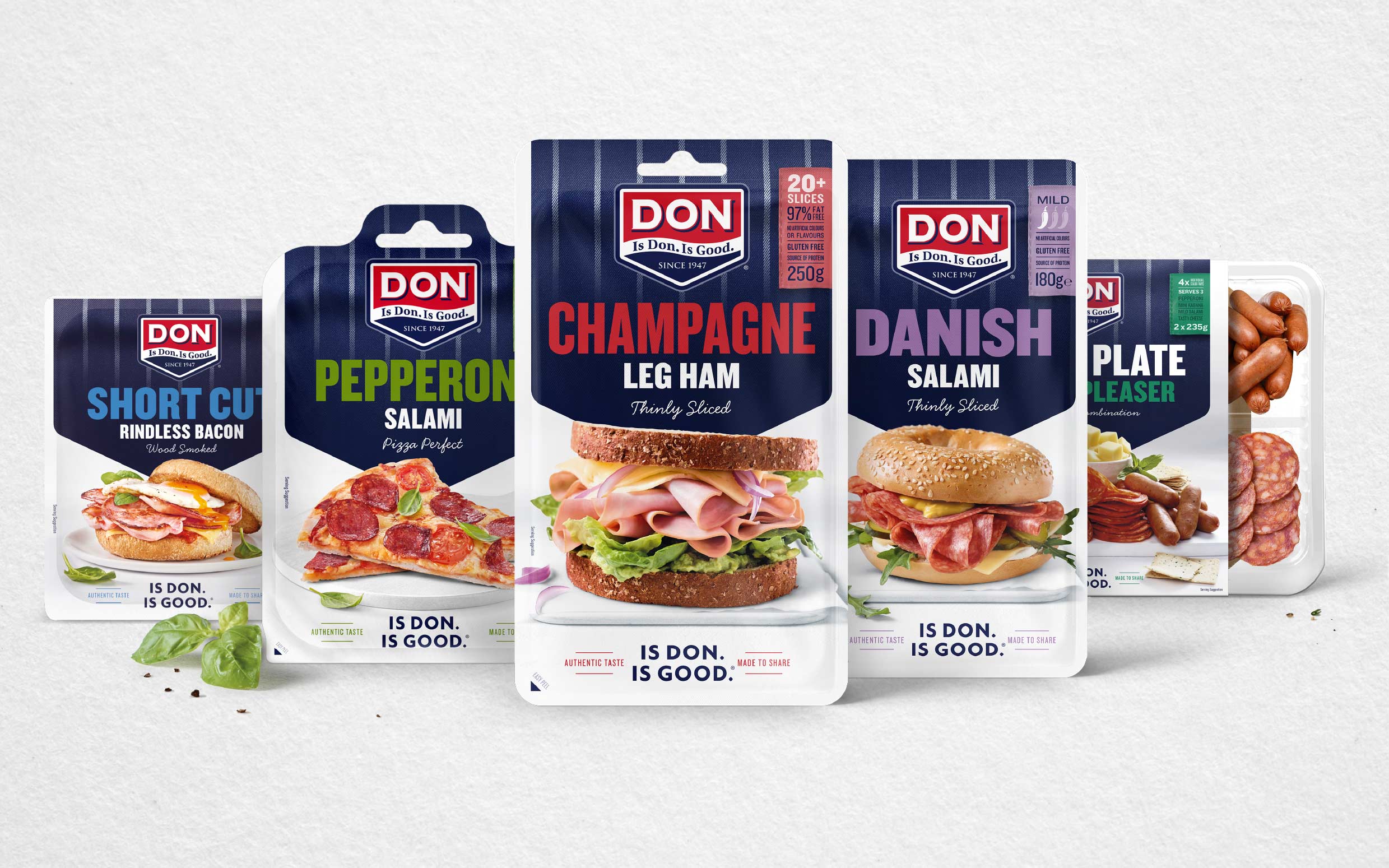
FMCG branding is the practice of building an identity system for that kind of product. It combines brand strategy, visual identity, packaging design, range architecture, on-pack copywriting, regulatory compliance, and print production into a single system built to win at the point of purchase. Every element serves the same test. Can a shopper find it, understand it, trust it, and reach for it, in the time it takes them to walk past.
FMCG branding is not visual identity applied to a product. It is a commercial system that only reveals itself as visual identity.
Why FMCG branding is not like other branding.
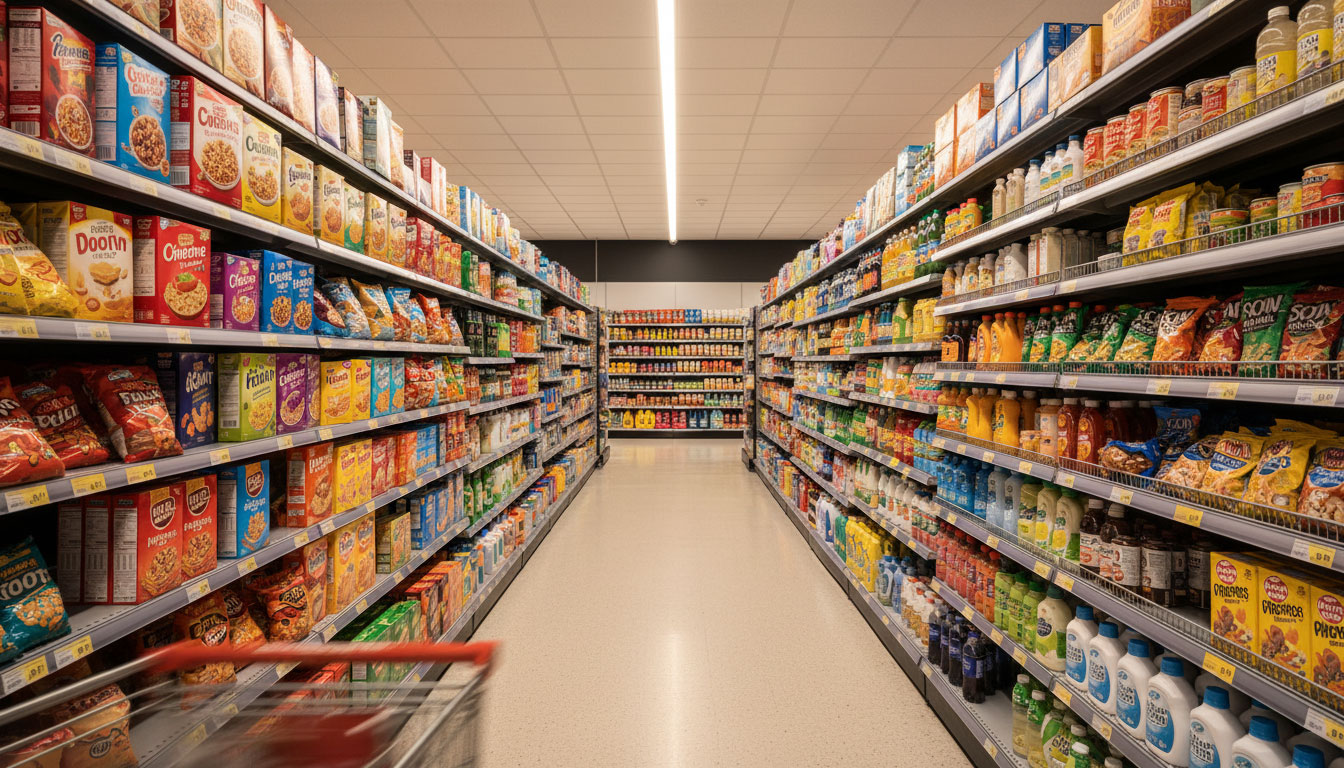
Corporate branding sells trust to a room. Tech branding sells a promise to a scroll. Fashion branding sells a story to an aspirant. FMCG branding sells a decision to a busy person under supermarket fluorescents who has fourteen other items to buy and three minutes before their toddler loses composure. The judgement is instant. The margin for a second chance is zero.
That difference shapes every craft decision. Colour has to work at four metres. Type has to hold at thirty centimetres. The brand mark has to survive the compression of a small sachet and the scale of a family pack. The information hierarchy has to answer three unspoken shopper questions in this order: what is it, why should I trust it, why now. A brand that fails any of those three tests fails the whole transaction.
FMCG branding also lives inside a supply chain most other branding disciplines never touch. Every mark, every colour, every substrate choice has to reconcile with retailer artwork specifications, printer capabilities, regulatory copy requirements, barcode positioning, and dieline tolerances. The best FMCG design work looks effortless on shelf precisely because the invisible commercial and production discipline behind it is relentless.
What an FMCG brand system actually contains.
A complete FMCG brand system is more than a logo. It carries five compounding layers, each doing a specific job on shelf and each dependent on the ones underneath.
- Positioning. The strategic case for why this product exists, who it's for, and what it does that no competitor does. Everything visual is a translation of this.
- Identity. The mark, colour, type, voice, and photography direction that carry the brand across every touchpoint. Distinctive enough to own, disciplined enough to scale.
- Range architecture. The system that lets one brand hold three SKUs today and forty SKUs in three years without collapsing. Category tiers, variant coding, information hierarchy, launch runway.
- Packaging mechanics. Front-of-pack hero claim, back-of-pack detail, side-panel utility. Every pack a self-contained sales conversation calibrated to its shelf position and its shopper mindset.
- Retailer and marketing extension. Sales sheets for the buyer meeting, category catalogues for the range review, POS for the launch, digital assets for the DTC and social flow. The system holds across every channel it enters.
A brand missing any one of those layers is a brand that will spike then plateau. A brand that carries all five holds its position through category reviews, competitive reformulations, and consumer taste shifts.
The difference between branding and packaging.
The two get confused because they arrive at the shopper as one thing. They are separate disciplines that only work when they are done together.
Branding is the identity system. Logo, colour palette, type, voice, positioning, guidelines. It is the source code. It can live entirely on paper, entirely in a deck, entirely in the boardroom, and still exist as a brand.
Packaging design is the application of that brand system to a physical product on a supermarket shelf. It adds a whole second discipline on top of the brand system: SKU architecture, dielines, regulatory copy, print production specifications, retailer compliance, shelf mechanics. A pack cannot exist without the brand behind it. A brand without packaging is an unfinished argument.
The studios worth briefing on FMCG do both, together, in the same room, with the same senior hand. That is the only way the pack ships as a genuine extension of the identity rather than a printing compromise of it.
Designing for Coles, Woolworths, Chemist Warehouse and Petbarn.
Australia's retail landscape is a duopoly with a fringe. Coles and Woolworths together account for around two-thirds of national supermarket grocery sales, per the ACCC's 2024-25 Supermarkets Inquiry. Chemist Warehouse dominates the pharmacy and health category. Priceline holds beauty and health. Petbarn owns pet specialty. Big W and Myer hold ranges in variety and department. Sephora US is the international benchmark for beauty aspirations. Each retailer has its own compliance process, its own private label pressure, its own margin logic, its own category review calendar.
FMCG branding for the Australian market has to hold across all of them. A pack designed for Coles will get compared to a pack designed for Chemist Warehouse in the same shopping basket. The system has to feel deliberate in both environments without diluting its identity for either. Range extensions have to time to category review windows, not to the studio's calendar. Retailer sales sheets have to arrive in the format the category buyer expects, not the format the designer prefers.
Understanding this context is the difference between a beautiful brand and a brand that sells. The best FMCG branding studios in Australia are the ones that have shipped enough work through enough retailer approval processes to know where the invisible constraints sit. That knowledge is not on a website. It is earned pack by pack over a decade.
How much does FMCG packaging design cost in Australia?
These are Morice&Co.'s own project ranges from quoting and delivering packaging design work in the Australian market, not an independent industry benchmark. A single-SKU packaging refresh from an independent Australian studio typically starts around AUD $5,000 to $10,000. A full ground-up brand system with packaging across five to ten SKUs sits in the $20,000 to $60,000 range, depending on how much naming, brand strategy and category work the brief includes. A category-leading rebrand across a range of twenty or more SKUs, with new range architecture and full retailer rollout materials, ranges from $60,000 to $150,000 and beyond. A ground-up private label range for a major retailer sits at the top of that band.
The numbers vary because scope varies. A brand refresh with existing category insight and no naming work is faster than a ground-up new-to-world brand. A single-SKU pack is faster than a system that has to scale to forty. Retailer rollout materials, brand guidelines, and photography direction each add discrete scope. The right studio quotes fixed fees against a scoped brief, not hourly rates against an open commitment.
The wrong question is how much does packaging design cost. The right question is what does this brand need to earn back over the next three years, and what does the pack need to do to make that possible. Brands that treat packaging as a cost buy the cheapest option and reprint in eighteen months. Brands that treat it as a system investment ship once and hold the shelf for a decade.
What to look for in an FMCG branding agency.
The Australian market has plenty of design agencies. The number of studios with genuine FMCG depth is smaller than it looks. When evaluating, look past the portfolio thumbnails and check for these four signals.
- Retail experience. Ask which specific retailers the studio has shipped through. Not which brands they've designed for, which retailers those brands have been approved by. Coles, Woolworths, Chemist Warehouse, Priceline, Petbarn each have their own compliance requirements. Studios that have never been through those processes learn on your dime.
- Range architecture proof. Look for case studies with multi-SKU ranges, not single hero packs. Range architecture is where amateur and professional FMCG design separate. Anyone can make one pack look good. Building a system that holds across twenty is a different discipline.
- Production discipline. Ask who handles finished art and print liaison. If the answer is a separate agency or a junior, the studio isn't set up for FMCG. Pack production is where beautiful concepts get compromised into ugly reality unless a senior hand owns it through.
- Category coverage vs. category depth. A studio that has done food, beverage, health, beauty, and pet is a studio that has learned the compounding effect of category knowledge. One that has done only one is a studio that will need to learn on your project.
Awards are pleasant. Category depth is decisive. The best FMCG studios don't just win awards. They ship packs that sit on shelves for five years, hold their price point, and hand the category leader position to the brand that briefed them.
FMCG branding as a commercial system.
The tempting mistake with FMCG branding is to treat it as a design task. Pick a nice logo, add a pretty pack, ship. That framing produces a brand that looks reasonable in a portfolio and sells nothing on a shelf.
FMCG branding is a commercial system that happens to have a visual output. Every design decision reconciles to the shopper's three-second judgement, the retailer's compliance requirements, the manufacturer's print capabilities, the category's shelf conventions, and the founder's growth ambition, in that order.
Get all five right and you have a brand that compounds. Coles becomes Woolworths becomes Chemist Warehouse becomes Petbarn becomes Sephora US. Get one wrong and every pack is a compromise. That is what FMCG branding is, and why the studios who do it well are the ones that treat it as a category commercial discipline rather than a visual identity brief.