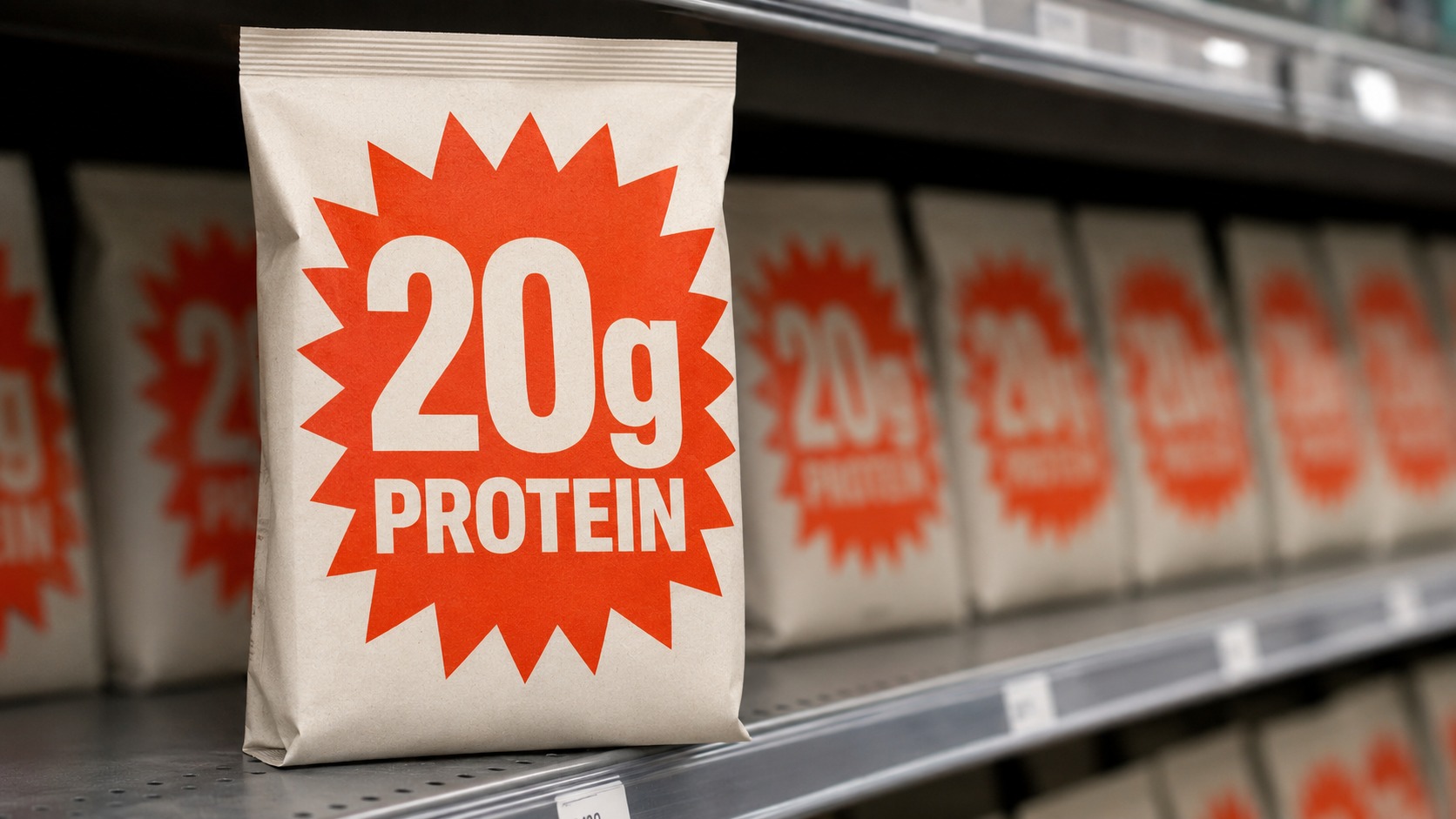
The shelf has a uniform.
Walk any major pharmacy and the visual range collapses to a handful of moves. Clean white backgrounds. A primary colour bar. Functional iconography. Block sans serif. The category looks like a medical aisle because brands assume that is what shoppers trust.
The problem is that when everyone looks credible in the same way, no one looks distinctive. Trust without distinction is invisibility. Shoppers walk past the entire fixture and reach for the one they remember from the ad or the one their friend mentioned. Brand has done none of the work.
Risk aversion dressed as strategy.
Three forces produce category sameness. Regulatory caution about claims. Marketing teams benchmarking against the category leader. Designers solving for compliance before they solve for cut-through. The result is decades of small refinements within a tight visual fence.
None of those forces are unreasonable on their own. A supplement brand cannot make a wild medical claim. A small founder brand cannot afford a category-redefining gamble. A designer who ignores TGA requirements wastes the client's money. The trap is treating those constraints as a permission slip to copy what already exists.
Trust without distinction is invisibility. The category has trained itself into a uniform, and shoppers are reading past it.
Break the pattern, not the trust.
The brands that break out of the uniform do not abandon credibility. They protect the cues that shoppers read as quality, then they own a different visual territory. A confident wordmark. A non-obvious colour. A material change that signals a different category posture. Restraint with one move that the others cannot make.
The work is harder than category-following because every decision has to defend itself against the category default. But the payoff is the only one that matters at scale. A shopper walking down the aisle who stops because something looked different. That is the brand effect. That is what justifies the rate.
What to ask your designer.
- Show me three competitors that look exactly like you.
- What is one cue we will not copy, even if every competitor uses it.
- What is one move our category has not made yet.
- How does this design read at one metre, in motion, on shelf.
- What are we protecting from the heritage that we cannot afford to lose.
If the design cannot answer those five questions, it is going to disappear into the uniform. Send it back.