The Australian pet market is growing faster than grocery.
Australia has one of the highest per-capita pet ownership rates in the world. Around two-thirds of households have a pet, and pet spending has grown consistently faster than grocery for over a decade. The category has professionalised. Vet-developed formulations, single-protein diets, functional supplements, air-dried, freeze-dried, raw, gently-cooked. What used to be a rack at the supermarket is now a specialty retail category with its own economics.
Petbarn, owned by Greencross Vets, is the largest specialty pet retailer in Australia, with over 250 stores plus a strong online presence. PetStock is the second-largest chain. Amazon Australia has become a serious pet distribution channel. Coles and Woolworths hold the mass-market end of the category through their own private labels. Each channel has a different shopper mindset and a different set of shelf rules.
Pet buyers are not grocery buyers.
Grocery shoppers make dozens of small decisions in one trip. Pet buyers commit. They research the formula, cross-check with the vet, read the ingredient panel, and often stay loyal to a brand for years once they trust it. This means pet packaging has to work harder on two fronts than grocery packaging does. It has to earn the first-time reach, then it has to reward the second, third, and hundredth look with detail that holds up.
The humanisation trend has completely rewritten the category. Owners increasingly feed their pets the same way they feed themselves. Real ingredients they can pronounce, provenance stories they can verify, functional benefits they can name. Pet packs that read like human food packaging outperform packs that read like traditional pet food. The bag of kibble aesthetic is dying category-wide.
The pet shopper is not shopping for their pet. They are shopping for the version of themselves who takes their pet's welfare seriously.
Three shelf languages, three different fights.
The pet category has fragmented into three visual conventions, each with its own set of codes. Winning packaging design starts with understanding which conversation the brand is entering, then either honouring the code or breaking it deliberately.
- Veterinary / scientific. White backgrounds, clinical typography, colour-coded functional benefits. Trades on formulation authority. Natural Animal Solutions sits here. Distinctiveness comes from turning clinical into confident, not sterile.
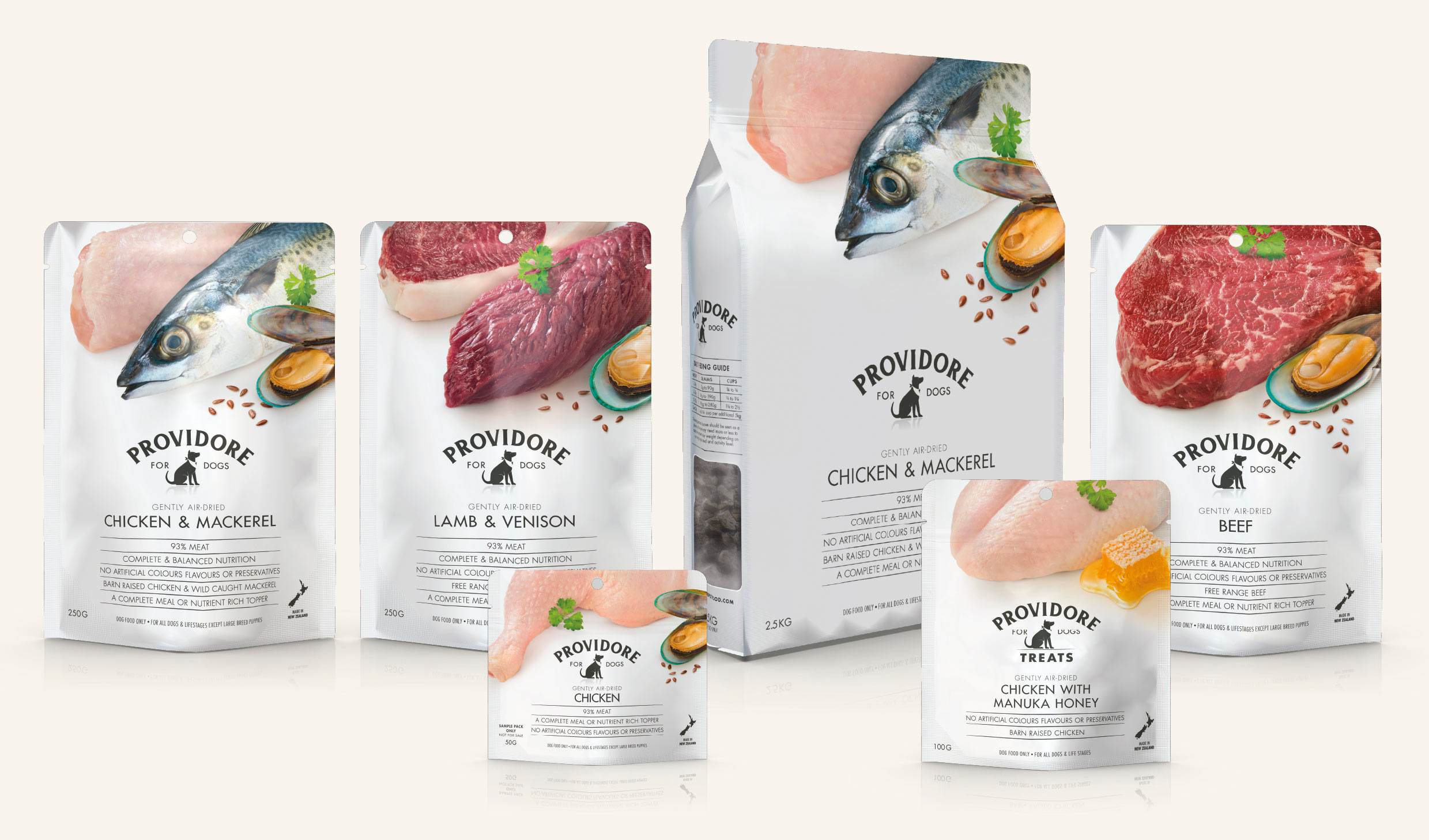
- Premium gourmet. Warm earth tones, illustrated ingredients, editorial photography, heritage typography. Trades on craft and provenance. Providore for Dogs sits here. Distinctiveness comes from restraint and consistency across a range.
- Functional wellness. Bold colour, benefit-forward claims, modern typography. Trades on outcome (joints, digestion, calm, coat, immunity). This is the fastest-growing convention and the most crowded. Distinctiveness comes from owning one benefit visually before the shopper reads the pack.
The ingredient panel is now front of pack.
In the pet category, the ingredient story is now the brand story. Every hero SKU features its lead protein and its supporting ingredients as visual heroes rather than fine print. Providore for Dogs leads with mackerel, mussels, venison, manuka honey, photographed like a butcher's window, front and centre. The functional pack has moved from checkbox claims (grain-free, hypoallergenic) to genuinely differentiated ingredient stories.
This shift matters because the shopper mindset has changed. Pet owners now read pet food labels the way they read their own. Ambiguous 'meat and animal derivatives' is a red flag. Named animal proteins with named percentages is a green flag. The pack has to prove the formulation without demanding the shopper read the fine print.
Pet is a range-first category.
Single-SKU pet brands don't survive on Petbarn or PetStock shelves for long. Category buyers allocate facings by range, not by product. A range has to hold across at least two or three protein variants, two or three size formats, and increasingly across dry/wet/treat formats. Every SKU has to read as part of the same family while declaring its own variant story clearly enough for the shopper to navigate the range in seconds.
The mechanics of pet range architecture are unforgiving. Variant coding by colour is standard, but colour has to survive being seen on a lower shelf, in a busy planogram, next to national brands doing the same thing. Illustration systems that carry across the whole range make a bigger difference than logo tweaks. Photography that documents the actual product beats stylised photography every time in this category.
The Petbarn private label story.
The Australian pet category has quietly become a private label story. Petbarn's own Providore range, Coles' Purr, Woolworths' pet lines. Retailers know their shoppers, they know the margins, they know the gaps. Private label lets them meet all three at once. For designers, this changes the brief. A private label brand isn't competing for shelf space against national brands from a neutral position. It's being placed on the retailer's own shelf, with retailer margin discipline behind it, aimed at converting the shopper mid-basket.
The trap with private label is designing to a house-brand aesthetic. Cheap-looking labels, generic photography, minimal system. That's a strategy for the bottom of the range, not the premium tier. A private label range designed to compete at premium price points has to look and feel indistinguishable in craft from a national brand. Because it is, in every way except the equity of the parent brand. Providore for Dogs is designed to that standard. That's the reason it holds its price on Petbarn's own shelf.
Category depth compounds.
Pet is a category where design experience compounds fast. A designer who has shipped one pet range knows the manufacturers, the regulatory copy quirks, the retailer artwork specs, the print substrates that work on kibble bags versus wet food pouches. A designer starting fresh learns all of it on your project.
- Ask for pet-specific case studies with multi-SKU ranges, not single hero packs. Range architecture is where amateur and professional pet design separate.
- Ask which pet retailers the studio has shipped through. Petbarn, PetStock, and the majors each have their own artwork spec sheets and category buyer preferences. Experience matters.
- Ask who handles the regulatory copy. Pet food labels have specific compliance requirements around percentages, feeding guidelines, life stage claims, and manufacturing origin. A senior pack designer should own this discipline, not offload it.
- Look for private label experience specifically. If the studio has designed a retailer private label range that compete with national brands on the same shelf, they understand the commercial constraints that shape every design decision.
Pet packaging is grocery packaging plus one.
Every rule of good FMCG packaging design applies to the pet category. Distinctive brand assets. Clear shelf hierarchy. Range architecture that scales. Manufacturing-aware artwork. Plus one more: the pet buyer's willingness to research and stay loyal is greater than the grocery buyer's. That rewards packaging that gives the shopper more to trust, not less.
Pet brands that treat packaging as a checklist ship a pack that gets tolerated. Pet brands that treat packaging as the primary conversation with the owner ship a pack that gets picked up, taken home, and repurchased. The category is growing, the shopper is more discerning, and the retailer stakes are higher than they've ever been. That combination rewards genuine craft.