What each one actually is.
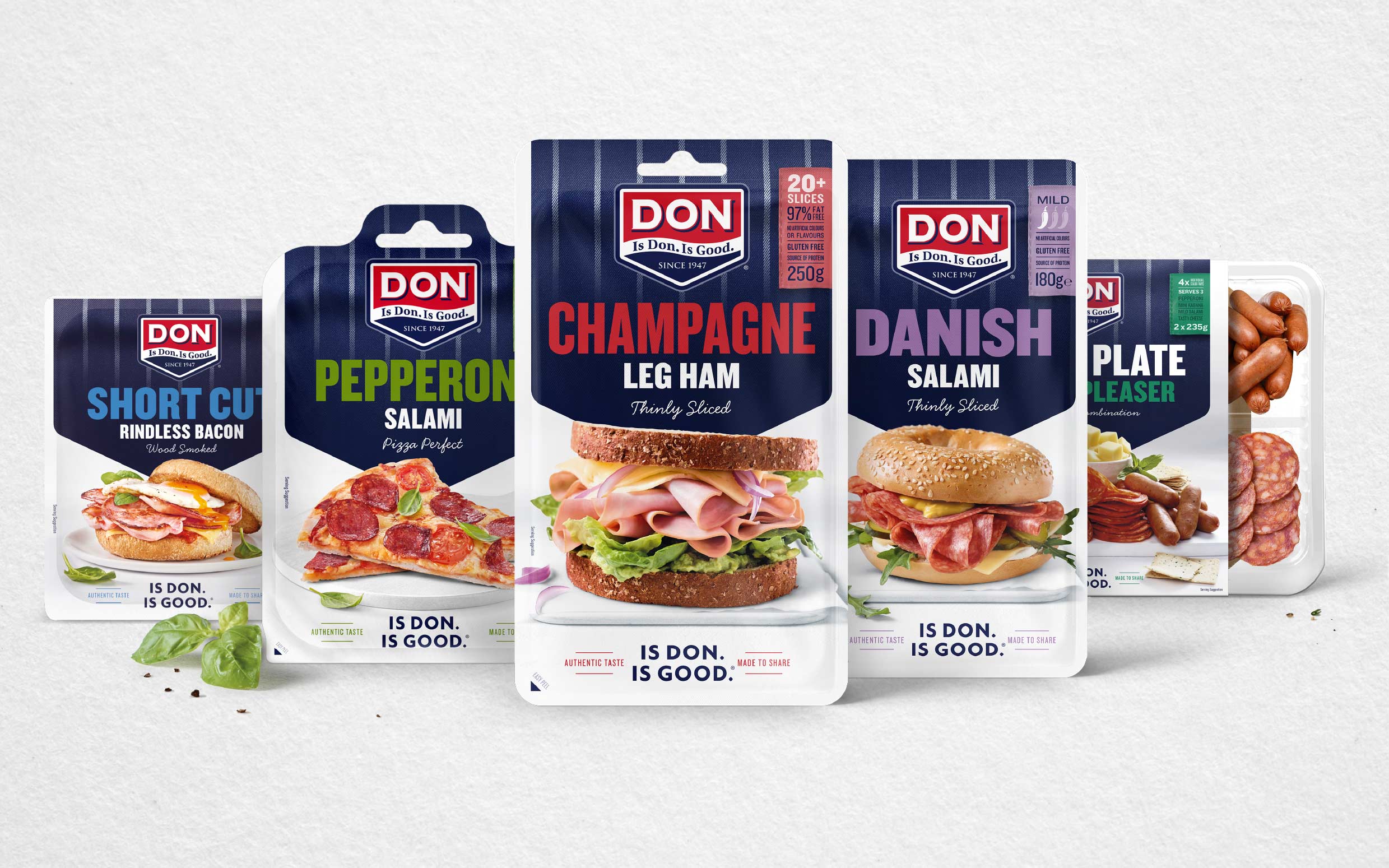
A **national brand** is a brand owned by the brand company, sold through multiple retailers, priced and marketed independently. Cadbury, Cenovis, Boag's, Australian Glow: every case study on morice.co that carries the client company's own brand equity.
A **private label** is a brand designed for and owned by a specific retailer, sold through that retailer's stores only, priced against the retailer's own margin logic. Coles' Finest range, Woolworths' Macro, Petbarn's Providore. The retailer commissions the brand, the retailer owns the equity, the retailer runs the P&L.
Where the money is made, and by whom.
National brand P&L. Brand company owns the manufacturing spec, sets the wholesale price, pays for marketing, and negotiates trade terms with each retailer. Gross margin lives inside the brand company. Retailer takes a listing margin (typically 30-45% depending on category). Brand company retains the rest.
Private label P&L. Retailer owns the manufacturing spec (often via a specialised supplier), sets the shelf price, controls the marketing (usually minimal, the pack does the marketing), and takes the entire margin between manufacturing cost and shelf price. Manufacturer takes a wholesale margin. Retailer takes 50-70% of the retail price. Brand company (the retailer) captures everything.
The implication for design. National brands justify big brand-building budgets because the equity accrues to the brand company. Private labels justify tighter budgets because the retailer captures the margin regardless. But the best private labels (Petbarn's Providore, Coles' Finest, Aldi's premium tier) invest in national-brand-quality design because the retailer is playing a long game. Premium private label at premium price is where retailer P&L expansion happens.
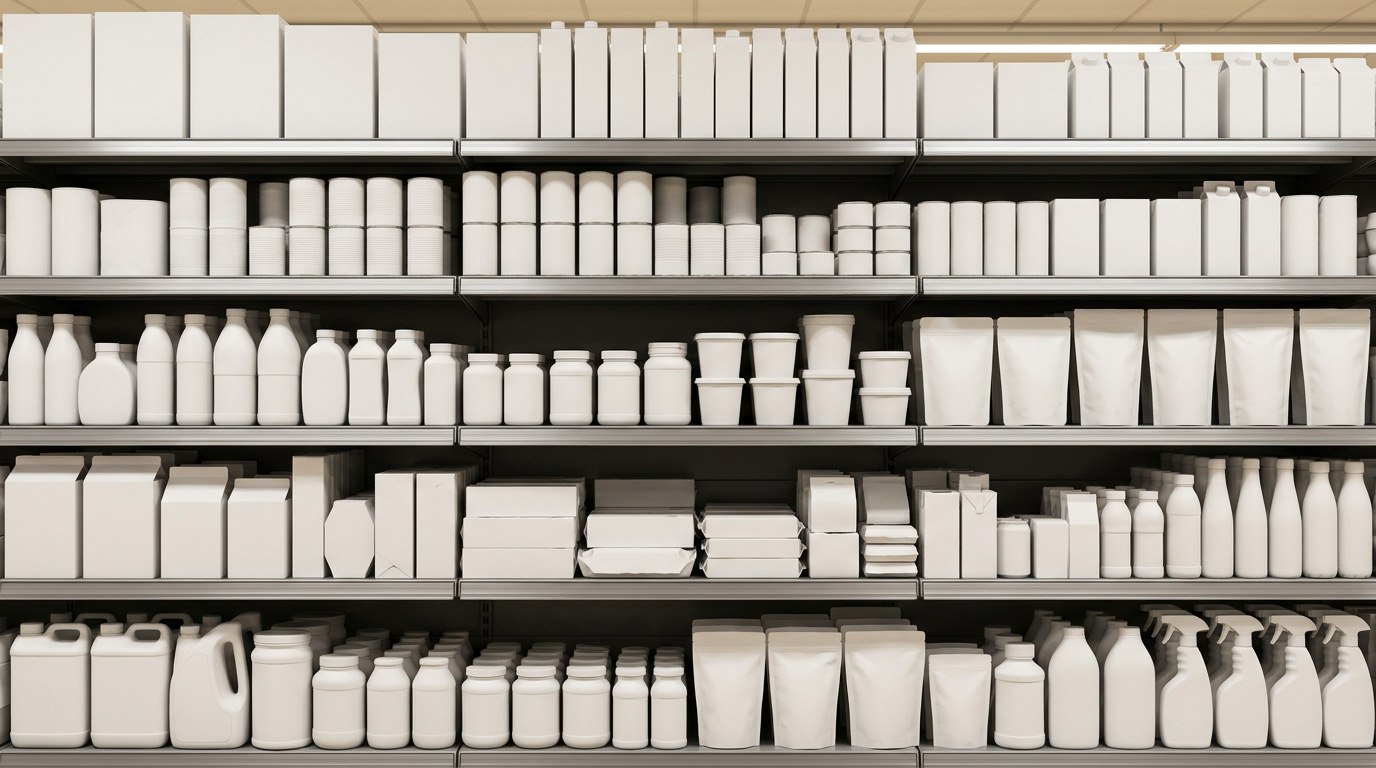
The same shelf, different fights.
National brands compete against each other for shopper attention, against private labels for value shoppers, and against the retailer's own listing decisions for shelf space. The pack has to earn its facing count every category review.
Private labels compete for the same shopper attention but from a structurally advantaged shelf position. Retailers place their own private label at eye level, adjacent to the category leader, often with dedicated end-of-aisle placements. The design job is to look like it deserves that placement.
The design implication. A national brand's pack has to fight for attention. A private label's pack has to deserve the attention it is already given. Different design briefs, different visual outcomes.
The brief looks similar. It is not.
- Range depth. National brand can launch with one SKU and build out. Private label typically launches as a full range (3-15 SKUs) because the retailer wants the category presence from day one.
- Naming. National brand can name whatever it wants. Private label naming often has to fit within a retailer sub-brand family (Coles Finest, Woolworths Macro, Petbarn Providore) with existing typographic and colour rules.
- Timelines. National brand timelines flex to the brand company's readiness. Private label timelines are locked to the retailer's category-review calendar, non-negotiable.
- Cost management. National brand can invest in premium substrates and finishes if it earns them back at shelf. Private label has to hit a retailer-mandated cost-to-manufacture that leaves the retailer margin intact.
- Marketing support. National brand often gets standalone marketing campaigns. Private label gets whatever share of the retailer's category marketing budget it can earn.
Choosing your commercial architecture.
**National brand wins when:** the brand equity you build is your main long-term asset. You want distribution across multiple retailers. You have the marketing budget to build recognition beyond the shelf. You are prepared to fight for facing count every review. The upside is uncapped. The equity you build can be sold or scaled internationally.
**Private label wins when:** you are a retailer looking to expand margin without the risk of a national-brand launch. Or you are a manufacturer with strong production capability who wants guaranteed volume from a single retailer rather than fighting for national distribution. The upside is more predictable but capped. You do not own the brand.
A hybrid strategy is possible. Manufacture your own national brand, and simultaneously supply a retailer's private label under a different brief. Common in Australian pet food, health supplements, and premium grocery.
What a premium private label actually looks like.
Providore for Dogs is Petbarn's premium private label pet food range. Morice&Co. designed it to Petbarn's brief with one non-negotiable requirement: it had to hold its own against national brands sitting a metre away on Petbarn's own shelves. Not a house-brand at a house-brand price. A genuine premium proposition earning a premium price point across Petbarn stores nationally.
The design system. Heritage typography that reads as artisan grocer. Dog silhouette anchor across the range. Ingredient-forward photography like a butcher's window. Range architecture across three proteins, two pack formats, treats and trial packs. Every design decision reconciled to the retailer's margin logic, the shopper's expectations, and the shelf competition.
The result. A private label that looks and feels indistinguishable in craft from a national brand. Which is exactly the point. Read the full case study at morice.co/work/providore, or read the deeper pet-packaging pillar at morice.co/notes/pet-packaging-design-australia.
Choose the commercial architecture, then design to it.
National brand and private label are two different games. The design work looks similar from the outside but the constraints, economics, and decisions are structurally different. The mistake founders make is choosing the model based on which one feels more prestigious rather than which one matches their commercial position, capability, and appetite for brand-building risk.
The best studios can design for either. What matters is understanding the commercial model first and letting the design decisions flow from it, not the other way around. Every pack is a commercial system. The system chooses the design constraints, not the reverse.