Households are binning food because of a label.
The numbers behind the pilot are blunt. Australia wastes about 7.6 million tonnes of food a year. Households account for roughly a third of that, and most of what they throw out is still edible. OzHarvest research found that 58% of high-waste households discard food because they cannot tell Use By and Best Before apart.
Read that again as a brand owner. More than half of the households doing the most damage are not careless. They are confused, and the confusion lives on your pack. A Use By date is about safety and should be followed. A Best Before date is about quality, and food past it is often fine. Two different instructions, usually delivered in the same grey code, in the same corner, at the same size.
Nestlé's answer is to add a prompt where the decision happens. That is a smart move. It is also an admission that the existing date marking is not doing its job.
Nobody briefs the date panel.
Walk through how a pack is built. Hero panel, brand block, claims, nutrition, legal. Months of work. Then the date code arrives at the end of the process as a line of ink applied on the filling line, wherever the machine can reach. It is not in the artwork. It is not in the brief. It is often not in the proof sign-off at all.
That is a strange place to leave the most consequential piece of information on the pack. Shoppers check it at the shelf, to judge freshness, and again at home, to decide whether to eat it. If it is low contrast, tucked under a seal, printed on a crinkled film or lost on a busy background, the pack fails at the exact moment that matters. The brand has spent its whole budget on the first three seconds and nothing on the last one.
Content is regulated, so what the date says is not yours to change. Where it sits, what it sits on, how clearly it reads and what language surrounds it is entirely yours.
A pack is only as honest as its least designed panel.
Clear dating is a retail asset, not a compliance chore.
Start with the buyer. Retailers carry the cost of waste in store and the reputational heat of waste at home. A pack that reads clearly is easier to rotate, easier to audit and less likely to generate a complaint. Sustainability teams at the majors are already measuring packaging. Waste is the next number in the same conversation, and a brand that shows up with a clearer date system is solving a problem the buyer has not yet had to ask about.
Then the shopper. Trust is built in small, repeatable moments. A shopper who can read the date without tilting the pack under a light feels looked after. A shopper who bins a loaf they could have eaten feels, quietly, that the brand let them down. That feeling does not show up in research. It shows up as a switch to the next brand in the bay.
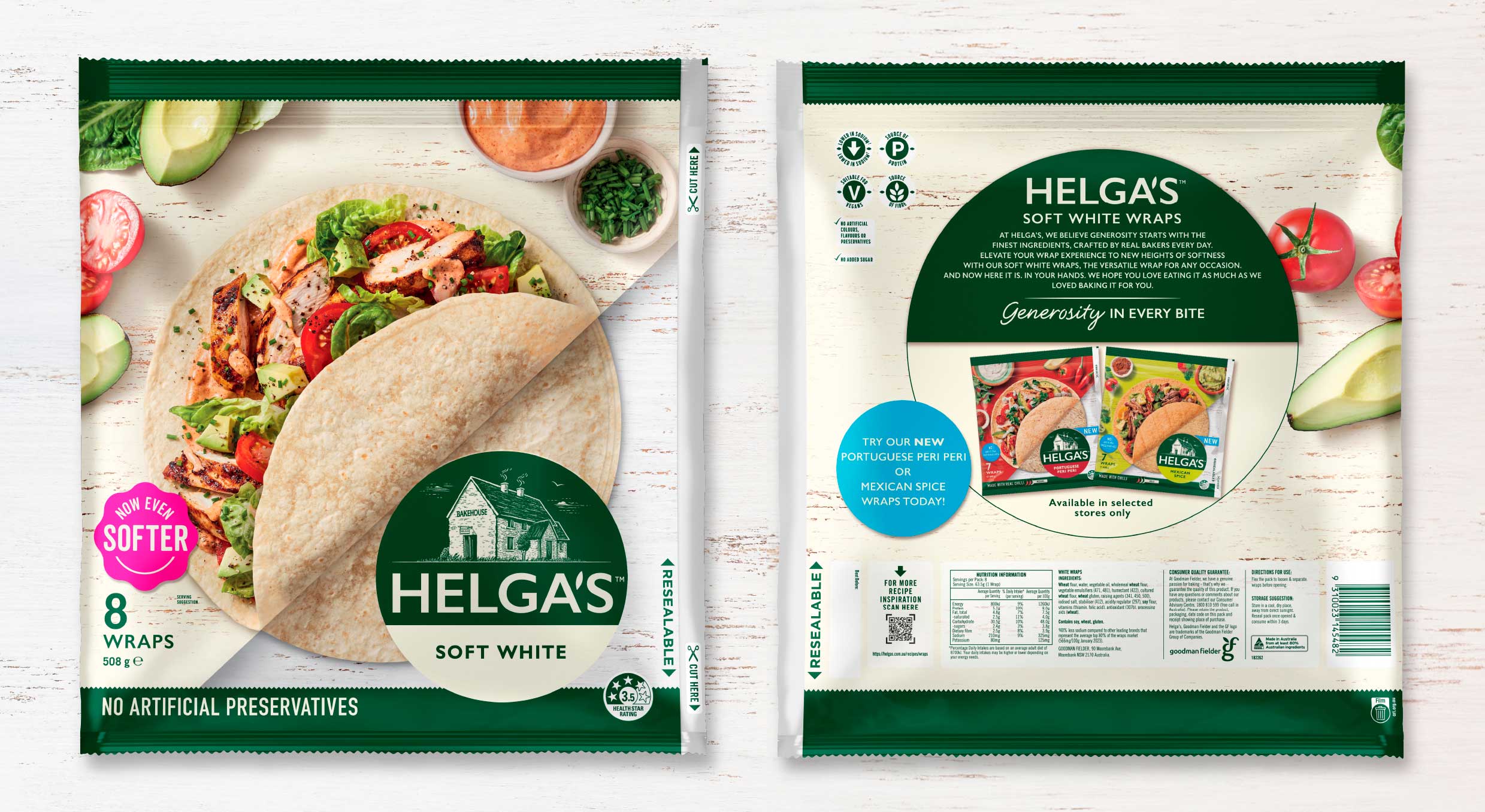
Bread is the cleanest test. A loaf sits in a pantry for days, the date is the only freshness cue, and the decision is made at the kitchen bench. When we rebuilt the Helga's range, the job was to make the bag work across all of those moments, from the shelf to the toaster. Everything on a pack like that has to be legible at the point of use, because that is where the brand either earns its place or loses it.
Design the date before the filling line does.
- Put the date panel in the artwork. Reserve a flat, clear, high-contrast zone and draw it on the dieline, so the coder has somewhere good to print.
- Match the substrate to the code. Test the print on the real film, seal and finish. A code that reads on a paper proof can vanish on a crinkled flow-wrap.
- Say what the date means. Plain language beside Best Before or Use By removes the confusion that sends edible food to the bin.
- Keep it away from seals, folds and busy colour. If the shopper has to hunt, the design has already failed.
- Add the date panel to your sign-off checklist. Packaging that goes to print without it has an unfinished brief.
Nestlé added a logo to explain a date. Smarter brands will fix the date so it needs less explaining. Either way, the direction is clear. Packaging is being asked to carry more responsibility for what happens after the shop, and the brands that treat the least glamorous panel as a design job will be the ones the shopper trusts at the bench.