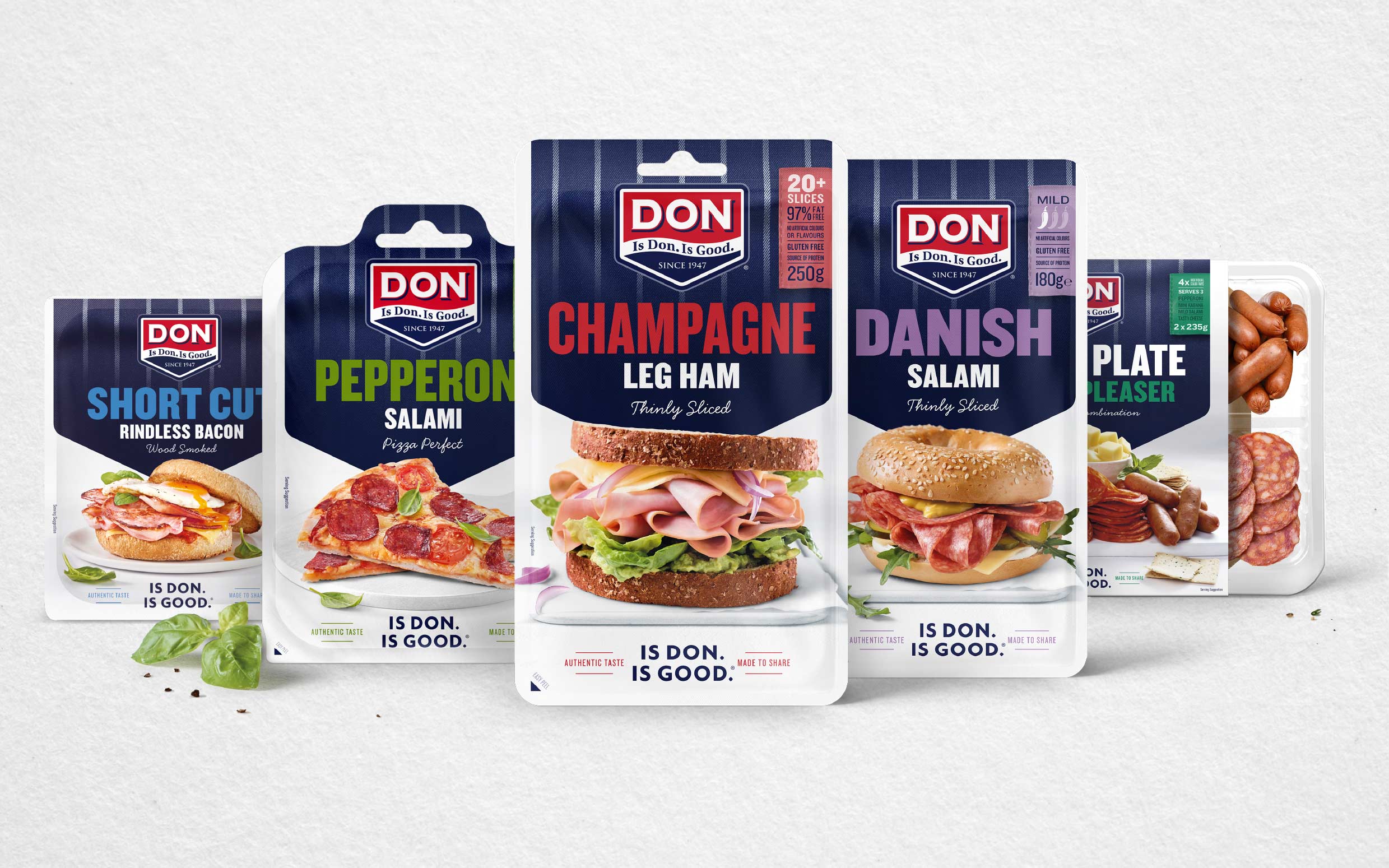
Category managers are running a shelf, not a category.
A category manager at Coles or Woolworths is responsible for the linear metre of shelf in front of you. Their KPI is sales per metre. Every SKU they list takes a slot away from another SKU. When they evaluate your pitch, they are doing the maths in their head about whether your pack will out-earn the one it is replacing. That maths happens in the first thirty seconds of looking at your pack on the table.
Founders often arrive expecting a conversation about brand story. They get a conversation about distinctiveness, shelf navigation, and price point clarity. The deck is the supporting material. The pack is the proposition.
What the retailer is actually scanning for.
- Does this pack tell me what category it is in from one metre away.
- Does it tell me the price point without me reading the label.
- Does it stand apart from what is already on shelf without confusing the shopper.
These are not aesthetic questions. They are commercial questions dressed in visual language. The pack that answers all three earns the slot. The pack that misses one of them ends up in the discussion about whether it can be improved before listing, which usually means it does not get listed at all.
The retailer is making a shelf decision, not a spreadsheet decision. Your pack is the proposition. The deck is the supporting material.
What gets pitches rejected.
Three patterns we see fail with category teams. A pack that looks too much like a global aspirational brand and not enough like an Australian shelf occupant. A pack that signals a higher price point than the founder can sustain at scale. A pack that hides the category cue under stylised illustration, so the buyer cannot tell at a glance whether it sits in the Pet, Wellness, or Beauty fixture.
Each of these is a design problem with a commercial consequence. None of them get fixed in the boardroom. They get fixed at the brief stage by working with a designer who has been in the room before.
The patterns that earn the slot.
Premium grocery wins on tactile finish and brand confidence. The pack signals that it earns its rate. Mass grocery wins on shelf navigation and category instinct. The pack signals that it belongs in the fixture and stands out within it. Pharmacy wins on credibility and clarity. The pack signals that the shopper can trust the claim and find the variant.
The retailer is not looking for the cleverest design in the room. They are looking for the pack that solves their shelf problem better than the SKU it would replace. Design for that problem and the conversation gets shorter.