The beige decade is over.
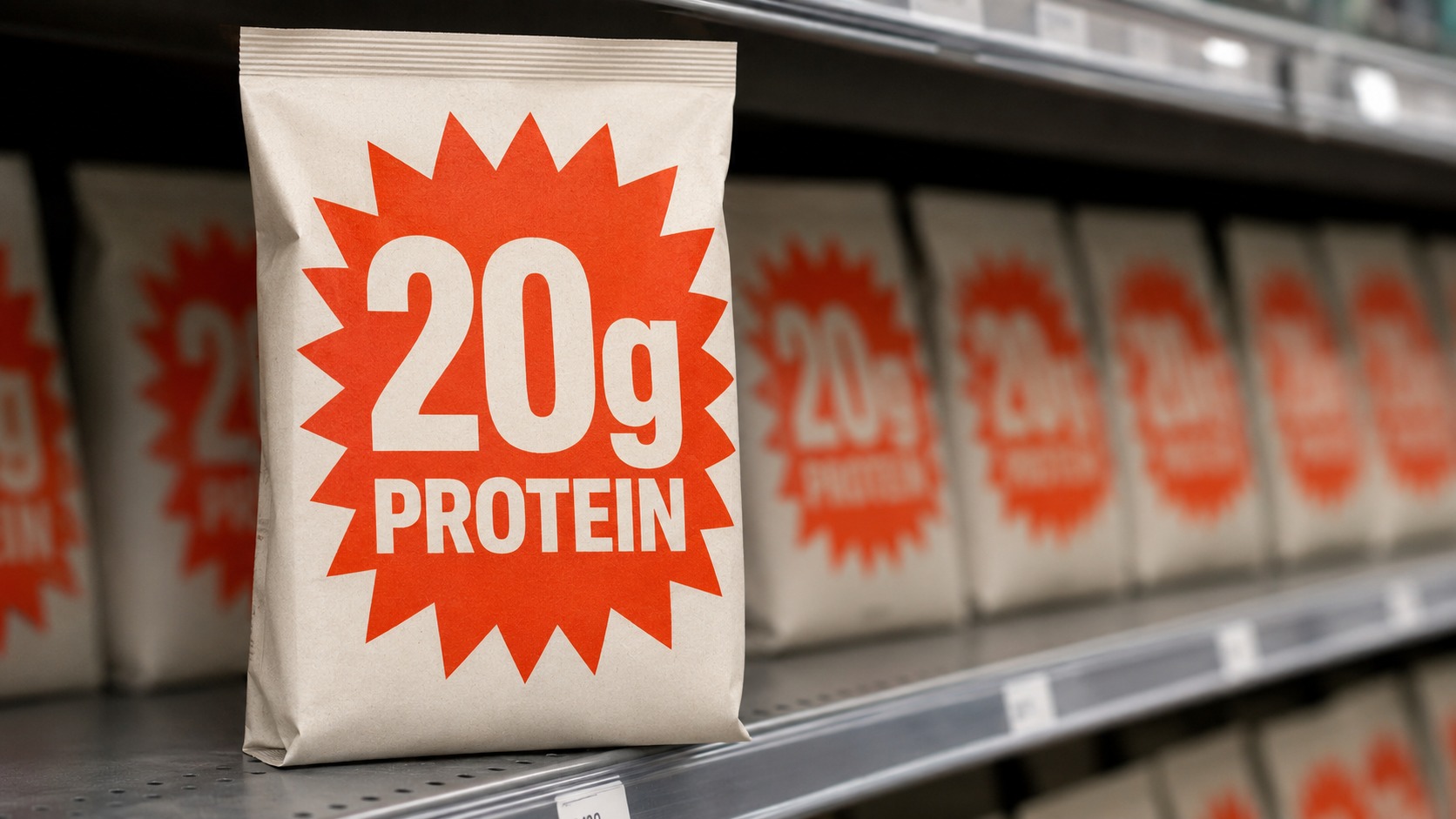
The minimalist era rewarded restraint. A generation of challenger brands won by looking calmer and cleaner than the incumbents around them. It worked because the shelf was busy and quiet stood out. Now the shelf has caught up. Restraint is the default, and the move that used to signal premium confidence now signals sameness.
So the pendulum swings. The trend forecasters have named 2026 the year of loud. Dopamine colour, maximal pattern, saturation everywhere. Founders arrive at the brief asking for the brightest pack in the aisle. The instinct that quiet has stopped working is correct. The conclusion is not.
Loud is not the same as distinctive.
Colour maximalism is a finish, not a strategy. Turning the saturation up is the easiest move on the board, which is exactly why everyone is making it at once. When one pack goes bright it stops the eye. When the whole fixture goes bright, bright becomes the wallpaper. The shopper adjusts to the new baseline within a week and reads straight past it.
This is the minimalist mistake in reverse. Distinctiveness was never about volume. It was about difference. The pack that owns a colour no one else in the category owns will always beat the pack that simply owns more colour. One is a position. The other is a setting on a slider that every competitor can push next quarter.
A shelf where everyone shouts is as flat as a shelf where everyone whispers. Distinctiveness was never about volume. It was about difference.
Loud colour carries a price on shelf.
There is a commercial cost the trend decks skip. On an Australian mass grocery shelf, colour is doing pricing work whether you intend it or not. A saturated, playful palette can read as cheap and cheerful, or it can read as boutique and expensive. Get it wrong and you have mispriced the pack before the shopper reads a word. The category manager sees it too, and a pack that fights its own price point is a pack that loses the slot.
Colour also carries navigation. In a wellness or pet fixture the shopper is scanning for the cues that tell them where they are and which variant is which. Drown those cues under a maximal wash and you have made the pack harder to shop. Standout that costs you findability is not standout. It is a tax the brand pays at every purchase.
Own one thing, and hold it.
The brands that win the loud era will not be the loudest. They will be the most committed. Pick one colour, or one move, that the category has left unclaimed. Then hold it across every SKU, every touchpoint, every season. Consistency is what turns a colour into an asset. A brand that owns its colour does not need to be bright. It needs to be unmistakable.
- Which colour in our category is still unclaimed, and can we own it outright.
- Does this palette read at the price point we actually sell at.
- Can the shopper still find the variant they came for at one metre.
- Will this still look like us in three years, or only this season.
- Is the colour doing brand work, or just turning up the volume.
Dr Pickles is loud, but it is not loud for the sake of it. The volume sits on a committed and specific world that no competitor can lift. That is the line between distinctiveness and noise. One is built and owned. The other is rented from a trend, and gone the moment the trend turns.