A regulator can end a range in a day.
The detail matters. Andrographis is a popular cold and flu herb, and dozens of listed medicines contain it. From 17 September it is no longer eligible for the listed pathway. Existing products can stay on shelf for now, but the TGA has said it strongly recommends sponsors withdraw them, and it has signalled compulsory recall if they do not. To stay in market, a product has to move to the registered pathway, which means clinical evidence and pre-market assessment.
Industry has argued the response was disproportionate and that a prominent front-of-pack warning should have been tried first. That debate will run for months. It does not change the commercial reality for a brand owner. The decision was made, the clock is running, and every pack with that herb as its hero is now a liability with a printing cost attached.
We are not here to judge the science. We are here to point out what the event reveals about how supplement brands get built. Most are built on the ingredient, because the ingredient is the easy story to tell.
The hero ingredient is a borrowed asset.
Ingredient-led branding is seductive. The ingredient is the claim. The claim is the shelf message. The shelf message is the brand name, the colour, the icon and the hero image. Everything points at one botanical, and for a while the pack is very clear. Clarity is the reason founders do it.
The problem is ownership. You do not own a herb. You do not own a permissible ingredient listing, a permitted indication or a regulator's goodwill. All three can change, and when they do, the brand has nothing underneath. The name describes a product you can no longer sell. The colour code belongs to a formulation that no longer exists. The equity you spent years building was never yours.
Compare that with a brand that owns a promise, a personality and a visual system. When a formula changes, the pack still works. That is the whole difference between a brand and a label.
If one regulatory decision can make your pack obsolete, you did not build a brand. You built a claim with a logo on it.
Build the system above the formula.
A resilient supplement architecture has three layers. The brand sits at the top: name, mark, colour, tone, the reason to believe. Below it sits the range logic, which tells the shopper what job each pack does. Ingredients and claims sit at the bottom, in a zone designed to change. When the bottom layer moves, the top two do not.
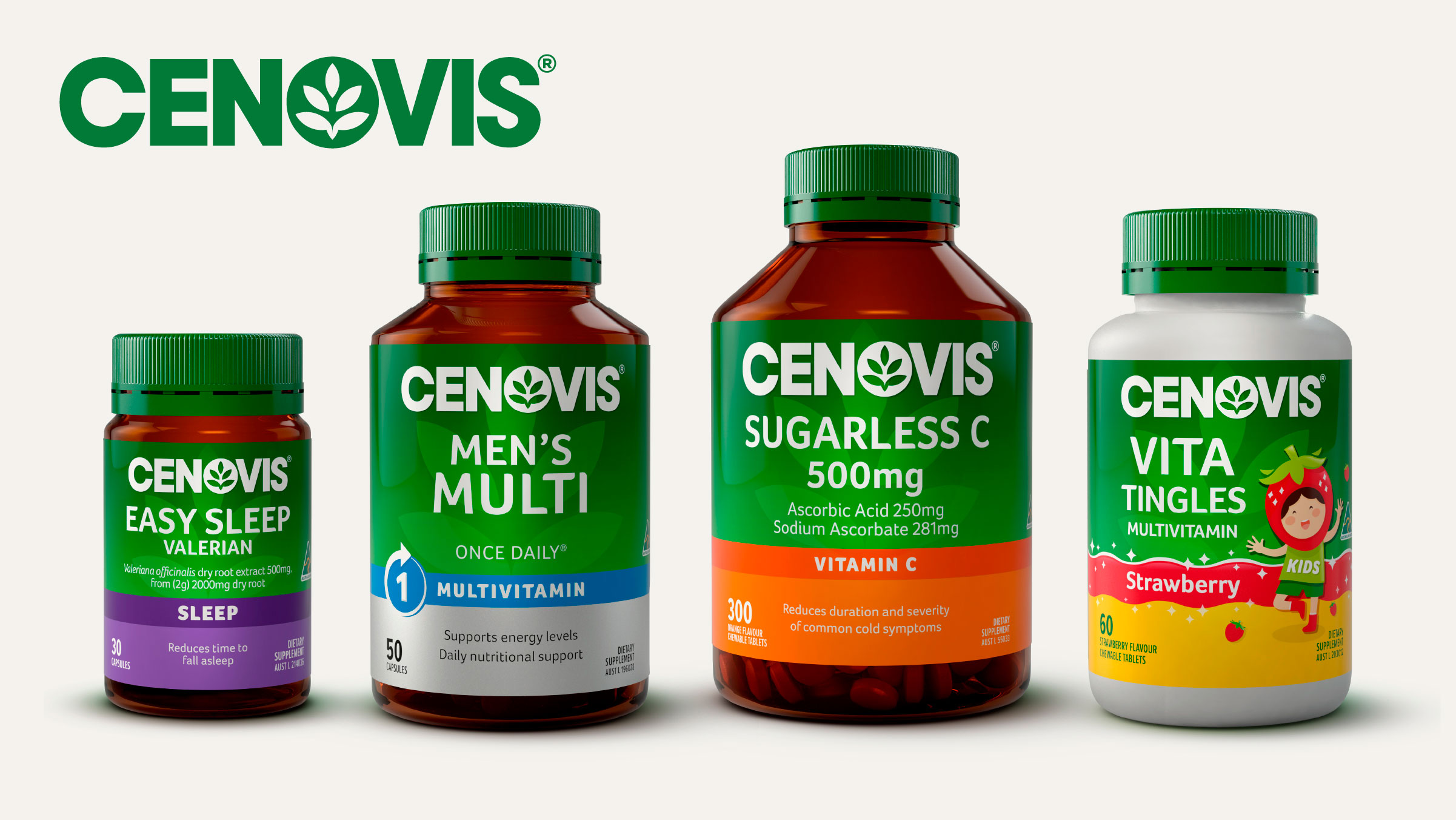
That means the hero panel carries the benefit and the brand, not a plant. It means ingredient names live in a flexible block that can be swapped without redrawing the pack. It means a range can reformulate, reposition or retire a hero without a rebrand. We build supplement systems this way because formulas, claims and rules move far more often than people expect. Cenovis is the long version of this thinking. The brand outlasts any single ingredient story.
There is a second lesson hiding in the industry debate. One argument made was that a mandatory, prominent front-of-pack warning should have come first, and that research suggested around two thirds of users did not notice the existing warning. If warnings move to the front of pack, they stop being an afterthought in the legal panel. They become a design element that competes with your hero. Brands that have already planned a disciplined space for mandatory messaging will absorb it. Brands that have not will watch it wreck their layout.
Audit your exposure before a regulator does.
- Name your single points of failure. Which ingredient, claim or permitted indication, if removed tomorrow, would break the pack?
- Separate brand equity from ingredient equity. If your name and colour only make sense with one botanical, you have a risk, not an asset.
- Design a swappable claims zone. Ingredient and benefit copy should change without touching the brand block.
- Reserve space for mandatory warnings. Plan for them at the front of pack now, not as a late scramble.
- Know your print runs. Reformulation timing is a packaging cost. Check what stock and film you are committed to before you need to change.
The brands that come through regulatory shocks well are rarely the ones with the best ingredient. They are the ones whose identity survives the loss of it. If the next announcement hit your hero tomorrow, the pack would either carry on or collapse. Find out which before someone else does.